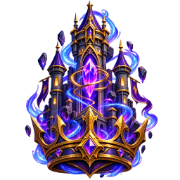
Sovereign Tower works as a narrative management RPG because party preparation replaces direct combat with consequential planning. The reviewed playthrough found its court choices, hidden Knight traits, competing assignments, and time rewinds compelling enough to create a strong one-more-cycle pull, even for a player who normally prefers hands-on tactical battles.
Review Verdict
The clearest verdict in the supplied review is that the game succeeds outside the reviewer's usual genre preference. They normally favor controlling characters, abilities, and positioning, yet by roughly the eleventh cycle they repeatedly wanted to continue. That reaction is useful evidence of pacing and engagement, but it remains one reviewer's experience rather than a universal score.
The central appeal is anticipation. Every cycle asks the player to make court decisions, prepare a limited roster, and commit Knights without the ability to rescue a poor plan through direct combat. Results then reveal whether the preparation was sound and how earlier choices have returned to help or complicate the reign.
Players who enjoy narrative RPGs, management systems, and delayed consequences are the clearest audience. Those seeking tactical battles controlled moment by moment should know that Sovereign Tower places the tactical work before an assignment. The game is about choosing who goes, what they carry, and what risks the kingdom accepts.
Court and Faction Management
Most cycles begin in the throne room, where nobles, commoners, and other petitioners present problems or new work. Choices can alter future events, unlock a contract, spend resources, or affect the People, Nobility, Scholars, and Merchants. Supporting one interest does not necessarily please the others, so a seemingly small response can become a strategic commitment.
Dialogue also shapes the Sovereign through styles such as Audacity, Wisdom, Tyranny, and Kindness. The review stresses that answers are not simply divided into correct and incorrect choices. They gradually define a ruler while changing the practical state that later objectives will test.
This creates useful long-range pressure. The player may preserve Gold for an upcoming requirement, raise a faction before a deadline, or keep a specific Knight home because a later event may need them. Decisions made several cycles earlier can return unexpectedly, giving court scenes more weight than isolated dialogue flavor.
Knights and Quest Assignment
The Round Table is the reviewer's favorite system and the game's substitute for a battle screen. Each contract shows relevant stats, duration, damage risk, possible rewards, and a description that can hint at the traits that matter. Some assignments request one Knight while others occupy several, turning roster availability into a genuine scheduling problem.
Visible numbers such as Agility, Charisma, Luck, and Magic are only part of the decision. Knights carry backgrounds, preferences, and positive or negative traits that may make a less obvious candidate better suited to the actual situation. The player repeatedly compares characters, rereads the contract, and then realizes the preferred Knight is also needed elsewhere.
Ending the cycle resolves that planning. Debriefs explain what influenced an outcome, note consequences, and award experience to successful Knights, who can then improve their attributes. The tension comes from having no tactical intervention after commitment: equipment, party composition, and interpretation of the contract were the battle plan.
Tower Rooms and Preparation
Between audience and Round Table, the player moves through unlocked rooms in the Tower. The Gallery introduces a talking stone figure connected to the Tower's history and powers, while the Forge handles equipment and armour repair. The Stables later add horses that can affect a Knight's capabilities.
Investigation is one of the most important room activities. Information requested in one cycle may arrive in the next, revealing a trait or background detail that changes how a Knight should be evaluated. This delayed discovery makes the roster feel like a cast to understand rather than a spreadsheet that is complete on first inspection.
Personal conversations support the same idea. Knights bring problems and relationship scenes that build identity, while also teaching the player how they may react to assignments. Story and management reinforce each other because caring about a character and understanding their mechanical fit often come from the same conversation.
Rewind as a Strategy System
The review avoids deep spoilers but identifies time manipulation as a major strategic feature. The Sovereign can return to an earlier event while retaining knowledge of what happened, then approach the situation with information the original timeline did not provide. This can affect more than a dialogue reply when assassinations, threats, or other serious court events are involved.
The temptation is to erase a disastrous consequence immediately. However, the story suggests that repeated use may carry a cost for the Sovereign, which gives the rewind narrative weight rather than presenting it as a neutral reload. The most interesting choice is sometimes whether to accept a damaged timeline or risk changing it.
Because knowledge persists, failure can become investigation. A bad result may teach the player about a hidden trait, future event, or missing preparation step. The review presents this system as increasingly interesting over time as consequences grow larger and the value of informed intervention rises.
What the Review Praises
The strongest praise is for the union of character writing and management. Knights are useful resources, but their personalities, conversations, and personal troubles stop them from feeling disposable. Learning who they are directly improves assignment decisions, so narrative attention has strategic value.
The review also praises escalating complexity without requiring direct combat. Concurrent missions, limited parties, faction conditions, Gold, and multi-cycle duration create enough friction to make preparation satisfying. A result screen carries suspense precisely because the player's control ended when the party left.
Finally, the cycle structure produces momentum. New petitioners, discovered traits, returning Knights, and delayed consequences continually offer one more unresolved question. For this reviewer, the full release improved on a demo they already liked and sustained interest beyond the opening tutorial.
Review Limitations
The supplied review is a single YouTube playthrough impression, not a comparative technical analysis. It does not provide a final numeric score, performance benchmarks, accessibility coverage, or a completed accounting of every route. Its praise is strongest as evidence of one player's engagement around the first eleven cycles and beyond.
The transcript also contains promotional closing language and transcription noise, which are excluded here. Claims about exact hidden formulas, universal replay consequences, or every late-game branch cannot be derived from this source. Those details are To be confirmed.